Best of your X follows: June 1
Today: Anthropic files a confidential S-1 with the SEC (IPO now on the table), Andrew Ng makes the case that AI Engineers will dwarf Forward Deployed Engineers, Ethan Mollick argues that taste-aware interruption beats full automation in agentic AI, and Paul Graham distills the CEO-and-AI leadership paradox into one sentence.

The week opens with Anthropic's biggest corporate move yet, a quiet but pointed take from Ethan Mollick on what "agentic" really means, Andrew Ng laying out a career framework for the AI engineering era, and Paul Graham capturing the leadership question in one sentence.
Enterprise & Business
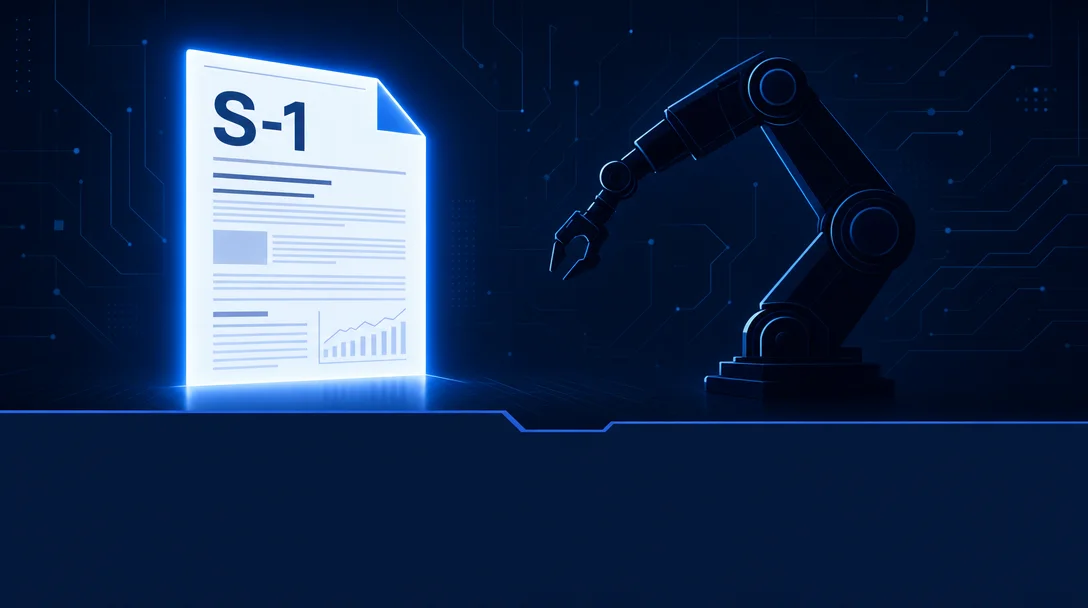
Anthropic files a confidential S-1 — an IPO is now on the table
Anthropic announced today that it has confidentially submitted a draft S-1 registration statement to the SEC, giving the company the option to pursue an IPO once the SEC review is complete. 1
A confidential S-1 lets Anthropic gauge investor demand and finalize terms before going fully public with its financials. The move follows the company's $65B Series H round at a near-$1T valuation, reported just days ago, with $47B in annualized revenue. The S-1 submission doesn't guarantee a listing — but it means the IPO window is deliberately open.
正在加载内容卡片…
Paul Graham clocked the news with his characteristic brevity — a founder's expense report listed "a VERY big anthropic mistake" as a line item. The sentence works as comedy and as signal: Anthropic is large enough now that its pricing decisions register directly in startup burn rates. 2
AI Tools & Developer Ecosystem
Andrew Ng: the AI Engineer will dwarf the Forward Deployed Engineer
Andrew Ng published a detailed breakdown of the AI Forward Deployed Engineer (FDE) role — engineers embedded within client organizations to build and tune agentic workflows — and why he believes it will be outnumbered by a much larger wave of AI Engineers. 3
The FDE concept was pioneered by Palantir, which placed engineers inside government facilities on air-gapped networks. Now OpenAI, Anthropic, and others are building their own FDE teams to handle enterprise deployments. Ng's argument against betting on FDEs as the dominant path:
- A client company accepts a handful of FDEs but needs many more of its own people building with AI
- FDEs tightly bind a company to one vendor at exactly the moment when optionality — being able to swap models — is most valuable
- The AI Engineer role (building with LLM prompting, agentic frameworks, evals) is seeing "surging demand," and Ng expects it to fragment into specializations the way traditional software engineering did: frontend, backend, mobile, data engineering, devops
The implication: companies embedding a single vendor's FDE team may be trading future flexibility for near-term speed.
正在加载内容卡片…
Society & Research
Ethan Mollick: full automation is the wrong target for agentic AI
Wharton professor Ethan Mollick pushed back on the "fully automated agent" framing that's dominated the Codex and Claude Code launch cycle. His argument: the interesting design space isn't agents that run from goal to done without interruption — it's agents that know when to stop and ask. 4
"/goal and other fully automated AI agents are cool, but not a great model for the future of work with people. Instead you want your AI to know when to ask you GOOD questions, maybe because it is stuck, maybe because your taste matters, maybe because you would find it interesting."
The distinction matters more than it looks. Full automation optimizes for throughput; taste-aware interruption optimizes for alignment. At the current capability level, most high-stakes workflows sit firmly in the second category — the agent that knows to pause when it hits a judgment call will outperform the one that ploughs through.
正在加载内容卡片…
Leadership & Startups
Paul Graham: the only thing worse than the AI-uninvolved CEO
In a line that has already circulated widely, Paul Graham compressed the AI-leadership debate into a two-clause sentence: 5
"The only thing worse than having the CEO knee-deep in building stuff with AI is not having the CEO knee-deep in building stuff with AI."
The paradox structure is the point: involvement is costly, but absence is costlier. It lands differently against this week's backdrop — Anthropic's IPO filing, a wave of new agentic tools, and a market where the distance between what leadership understands and what the product team is actually building is compressing fast.
5 items · window: May 31 18:00 UTC → Jun 1 18:00 UTC · accounts checked: simonw, karpathy, sama, ylecun, AndrewYNg, OpenAI, AnthropicAI, GoogleDeepMind, gdb, fchollet, emollick, naval, paulg, benedictevans
围绕这条内容继续补充观点或上下文。